
Snapshots In My Time, Of My Time.....Hauntings.
If you could go back in time and pick one person that you wanted to beat up on the playground, who would it be? No last names...... please ..no last names.


A little about the Pleasant Pheasant chain.
The Peasant Restaurants began in February 1973 when co-founders Steve Nygren and Dick Dailey left their respective careers with $25,000 in borrowed money and a dream. Poor and happy, they opened the Pleasant Peasant in a charming turn of the century building in Midtown Atlanta. The casual yet elegant atmosphere, sophisticated, yet informal service, and large, yet affordable portions made the Pleasant Peasant an instant favorite of Atlanta diners.
The restaurant was a place to meet friends and make new ones, yet distinct enough to provide a very special night out. This success led to the opening of the Peasant Uptown in Phipps Plaza in August of 1974. Set in a New Orleans style courtyard, this new Peasant Restaurant proved once again that fine dining need not be stuffy or expensive.The company grew happily over the next decade, then was sold in 1988 and again in 1997.

Basic Beliefs of Animism
In anthropology, animism can be considered to be the original human religion, being defined simply as belief in the existence of spiritual beings. It dates back to the earliest humans and continues to exist today, making it the oldest form of religious belief on Earth. It is characteristic of aboriginal and native cultures, yet it can be practiced by anyone who believes in spirituality but does not proscribe to any specific organized religion. The basis for animism is acknowledgment that there is a spiritual realm which humans share the universe with. The concepts that humans possess souls and that souls have life apart from human bodies before and after death are central to animism, along with the ideas that animals, plants, and celestial bodies have spirits.
Animistic gods often are immortalized by mythology explaining the creation of fire, wind, water, man, animals, and other natural earthly things. Although specific beliefs of animism vary widely, similarities between the characteristics of gods and goddesses and rituals practiced by animistic societies exist. The presence of holy men or women, visions, trancing, dancing, sacred items, and sacred spaces for worship, and the connection felt to the spirits of ancestors are characteristic of animistic societies.
What is Wheat Germ?
It’s the “heart” of the wheat kernel - a concentrated source of several essential nutrients including Vitamin E, folate (folic acid), phosphorous, thiamin, zinc and magnesium.
A two-tablespoon serving of Kretschmer® Wheat Germ with added Vitamin E and Folic Acid may help to improve your vitality and promote a healthy heart.
Wheat germ adds a delicious taste and healthy crunch to virtually any recipe, and it's an easy way to add extra nutrition. Wheat germ can also replace up to 1/2 cup of the flour in recipes for muffins, breads, pancakes, and many other baked goods, making it even easier to work into your diet.
Kretschmer® Wheat Germ, manufactured by The Quaker Oats Company, is the oldest and most widely available wheat germ. Unlike wheat germ sold in bulk, Kretschmer® Wheat Germ is toasted to enhance its natural, nutty flavor and vacuum-packed to preserve freshness. Make sure to try the healthy crunch of Kretschmer Wheat Germ in the recipes featured on this site, or add it to your old favorites. Two varieties are available: Original Toasted and lightly sweetened Honey Crunch. You’ll find both in the cereal aisle of your local grocery store.
What are pinworms?
Pinworms are small, white worms that live in the intestines. Pinworm infections are common in young children and are easily treated.
If your child is infected with pinworms, you may notice him or her moving around a lot in bed at night or being unable to sleep because of an itchy bottom. The itching is caused by the female pinworm that comes out of the rectum to lay eggs around the anus (the opening to the rectum). Sometimes tiny white worms (shorter than 1/2 inch) may be seen on the child's bottom at night or they may show up in the child's bowel movement.
Pinworms are easy to get. Pinworms are usually spread from child to child, and the eggs can be picked up on children's fingers when they are playing. Eggs can stay or your child's skin for several hours. They can survive for 2 weeks on clothes, bedding and toys. If the eggs are on your child's hands or toys, and your child puts their fingers or toys in their mouth, the tiny eggs can enter their bodies. The eggs stay in the upper part of the intestine until they hatch. After they hatch, the worms move down the length of the intestine, and then out the anus where they lay eggs.
In the late 19th century, cod liver oil was used to treat youngsters with rickets, a disease in which bone softens and weakens due to lack of vitamin D (abundant in cod liver oil). Rickets has all but disappeared thanks to fortification of milk and other foods with vitamin D.
Cod liver oil is now one of the most popular dietary supplements in Europe because it is a good source of omega-3 fatty acids. And recent research in this country has shown that a daily teaspoon of cod liver oil combined with a multivitamin containing selenium seems to prevent middle ear infections (otitis media) in children. In a study at The New York Eye and Ear Infirmary, investigators found that the youngsters prone to otitis media had lower than normal levels of EPA (an anti-inflammatory omega-3 fatty acid), vitamin A, and selenium. When they gave the youngsters cod liver oil, a multivitamin, and selenium, they found that the children suffered fewer ear infections. The findings were published in the July 2002 issue of the Annals of Otology, Rhinology & Laryngology.
Meanwhile, researchers in Wales have found that the omega-3s in cod liver oil may delay or even reverse the destruction of joint cartilage and the inflammation and pain of arthritis. Their studies showed that these essential fatty acids blocked the action of an enzyme responsible for destroying cartilage and also blocked the action of other enzymes that cause inflammation and joint pain.


Victor Turner: The Man
Victor Turner was born in Glasgow on May 28, 1920. His mother was an actress and his father was an electronical engineer. Influenced by his mother, at eighteen he studied poetry and classics at the University College, London. His studies, however, were disturbed by World War II. During that five year peiod he lived near the army base in a gypsy caravan with his wife and two children. It was at this time that Victor became interested in anthropology. He then returned to college to study under some of the greatest anthropologists at that time.
At age 29, Turner earned a Bachelors Degree with Honours in Anthropology and left London. He then decided to study anthropology under Max Gluckman at the University of Manchester. Also at this time (1950-1954), Turner worked among the Nbemu, a central African tribe, studying their society and religious practices. Later, he refocused his interest to ritual; he spends the rest of his career on this. In June 1955 he completed his Ph.D. and lectured at Manchester for several years. He wrote and published two monographs at this time along with his dissertation, Schism and Continuity in an African Society: A study of Ndembu Village Life (1957). These works presented him as a dominate figure in the Manchester School of Anthropology.
In 1961, Turner began a career in California as he became Fellow of the Center for Advanced Behavioral Sciences at Stanford University. There, he wrote The Drums of Affliction: A study of Religious Processes among the Ndembu (1968). He completed three books in 1964 while at Cornell University and conducted studies among the Gisu of Uganda. Turner became a professor of Anthropology and Social Thought at the University of Chicago in 1968.
At this time, his interests shifted to world religions and mass societies. He also began a study of modern Christian pilgrimage while at Chicago. Finally, at the University of Virginia he was a member in the Center for Advanced Studies and the South Asia Program. While at Virginia, his interest in performative play and theatre grew. Turner became interested in experimental theatre as a modern form of liminality where everyday reality is transformed into a symbolic experience. Turner adapted Max Gluckman's ideas on processional change to the study of ritual and centered his career around the ideas he developed from his studies. Victor Turner died in 1983.
Basic Beliefs of Animism
In anthropology, animism can be considered to be the original human religion, being defined simply as belief in the existence of spiritual beings. It dates back to the earliest humans and continues to exist today, making it the oldest form of religious belief on Earth. It is characteristic of aboriginal and native cultures, yet it can be practiced by anyone who believes in spirituality but does not proscribe to any specific organized religion. The basis for animism is acknowledgment that there is a spiritual realm which humans share the universe with. The concepts that humans possess souls and that souls have life apart from human bodies before and after death are central to animism, along with the ideas that animals, plants, and celestial bodies have spirits.
Animistic gods often are immortalized by mythology explaining the creation of fire, wind, water, man, animals, and other natural earthly things. Although specific beliefs of animism vary widely, similarities between the characteristics of gods and goddesses and rituals practiced by animistic societies exist. The presence of holy men or women, visions, trancing, dancing, sacred items, and sacred spaces for worship, and the connection felt to the spirits of ancestors are characteristic of animistic societies.

The Rites of Exorcism
Although it has been practiced for centuries, the Roman Catholic church uses the rites of exorcism only as a last resort. The priest performing the rite has to be certain that the victim is truly possessed, and not suffering from medical or psychological ailments.
The rite usually takes place in a church. The priest will wrap his stole around shoulders of the possessed person - known as a "demoniac" - to show that the victim is welcome in God's community. The priest will then sprinkle holy water while reciting prayers and passages from the Bible. He then makes the sign of the cross and touches the the demoniac with a crucifix. The priest finishes with exhortations to the possessing spirit to leave. The exorcism is over when the demon tells the priest its name and reason for possessing the subject. After the exorcism has been completed, the victim is warned not too stray too far from God's grace, lest the demon return.

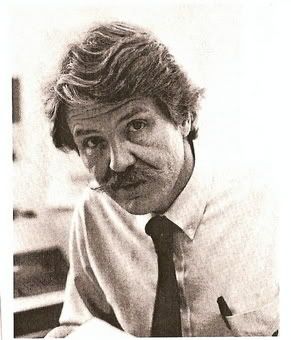
This was the face that haunted me for months!
The existense of ghosts has been debated for centuries. It is only in modern times with technology having advanced to it's current stage that we may now capture on film and audio what many believe to be images of the supernatural. The questions of why some can and yet others cannot see or sense the presense of these entities has been contested with numerous theories both for and against the subject of spirits. One such cause for speculation is do our children see and sense what many adults either cannot or will not see?
One theory is that children have not had years to adjust their thinking and have not had the time to train themselves as to what to accept or not accept as reality like adults have. Adults program their thinking and consequently refuse certain images, noises, and feeling as real simply
because in our minds we cannot accept impossible or unproven science.
Some parents unknowingly start to teach and train their children at a very young age to block these images. They do it out of protection and misunderstanding of the situation. How many parents have tucked their little ones back into bed with the words that they thought were reassuring; there are no such things as ghosts, you just had a bad dream, it wasn't real, it was just your imagination? I think most parents are guilty of this including myself. How many parents are guilty of telling their children that their imaginary friend is not real, maybe not realizing that not only is that friend real but a ghost? I am sure it has happened before. Do you ever wonder if any of those bad dreams, those images seen in the night, those imaginary friends how many may actually be ghosts that for whatever reason have shown themselves to a child?
When we tell our children it was just a bad dream we may inadvertently teaching them to mistrust what they may have actually be seeing. Eventually training themselves to block what they have been taught cannot be real. Where as the opposite side of this theory; the parent who teaches their children that sometimes for whatever reason, a spirit may linger after death,is leaving a space in that child to be able to accept the vision, the noise or the feeling of the supernatural. Could this be why some people are able to accept the supernatural with an open mind and yet others cannot? Does the door get shut at childhood or can it remain open? This is just one of the may theories used to explain why children see more of the supernatural world than adults do.
Shadow ghosts appear as a shadow of sorts. They look a bit like Ecto-mist but are dark gray to black in color. There are actually three separate types and we list them all in classes below. In photographs, it's easy to confuse them with natural shadows, so be careful with your analysis. They are usually extremely sneaky and evasive. When they are spotted it's usually out of the corner of your eye or as they are darting through a wall. They can also be spotted as a reflection in shinny objects and mirrors. As for photography, They are one of the rarest ghost types to be captured on film. Birds and cats are especially sensitive to them.
Type A - Appear as a small dark misty cloud and are almost always under two feet in length, but can hover or float up to 8 feet high.
Type B - Appear as a huge glob of thick cloudy mass. They typically range from 2 to 8 feet in height.
Type C - Appear in human form and some may be seen wearing a hat. They typically appear up to 8 feet in height.
Matthew 25:4: "Then shall he say also unto them on the left hand, Depart from me, ye cursed, into everlasting fire, prepared for the devil and his angels."
1 Peter 2:4: "For if God spared not the angels that sinned, but cast them down to hell, and delivered them into chains of darkness, to be reserved unto judgment."
Jude 1:6: "And the angels which kept not their first estate, but left their own habitation, he hath reserved in everlasting chains under darkness unto the judgment of the great day."
Revelation 12:9: "And the great dragon was cast out, that old serpent, called the Devil, and Satan, which deceiveth the whole world: he was cast out into the earth, and his angels were cast out with him."